Maximizing Return on Investment with Modern Track Welders
Understanding Track Welders and Their Applications
Overview of Track Welding Machines
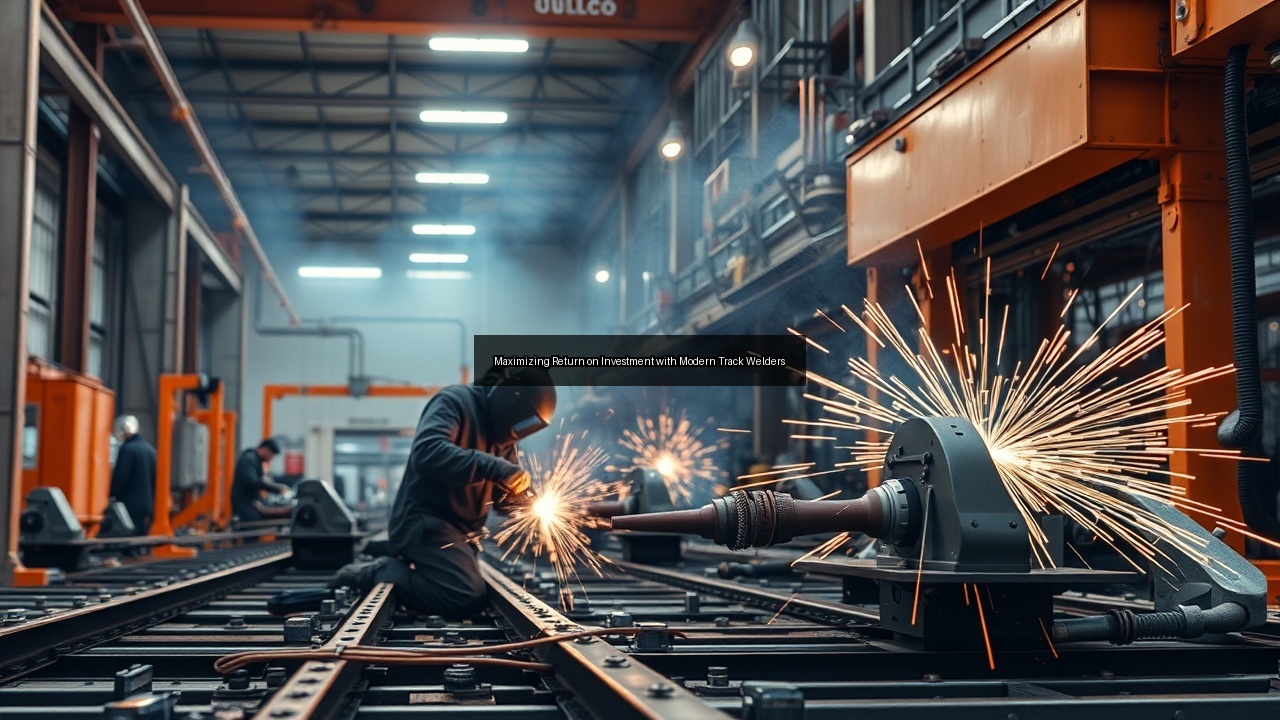
Track welders represent a specialized class of welding machines designed for high-precision applications, primarily in the manufacturing and construction industries. These machines utilize a track system to guide the welding process along a predetermined path, ensuring accuracy and consistency. The design of track welding machines allows operators to execute welds on large structures, such as beams and frames, with ease and precision. Unlike traditional welders, track welders can handle complex geometries and lengthy welds without sacrificing quality, making them essential for projects requiring meticulous craftsmanship.
Key Components of Track Welders
Track welders consist of several key components that work together to produce high-quality welds. The primary element is the welding head, which houses the electrode and delivers the welding current. The oscillator plays a pivotal role by creating oscillation in the welding arc, enhancing the fusion of materials. The connecting rod links the welding head to the machine's track, allowing for smooth movement along the designated path. Additionally, track welders often include advanced features like programmable controls for automation, ensuring consistent weld quality across multiple applications. Understanding these components helps users appreciate how track welders achieve superior results compared to standard welding machines.
Common Applications in Various Industries
Track welders find extensive use across diverse industries, including shipbuilding, construction, and manufacturing. In shipbuilding, these machines facilitate the joining of large metal sections, ensuring structural integrity and durability. Construction projects benefit from track welders when fabricating steel frames for buildings, bridges, and other infrastructures. The automotive industry also employs track welding for assembling vehicle frames and components, where precision is crucial. Additionally, manufacturers utilize track welders for creating complex machinery parts, where consistent quality directly impacts performance. By understanding these applications, businesses can leverage track welders to enhance productivity and quality in their operations.
Benefits of Modern Track Welders
Enhanced Efficiency and Speed
Modern track welders significantly boost efficiency and speed in welding processes. The automation capabilities of these machines allow for faster setup times and reduced labor hours. Operators can program the welding machine to execute multiple passes automatically, minimizing downtime during transitions between different welds. This efficiency translates into shorter project timelines, enabling businesses to meet tight deadlines without compromising quality. Additionally, the precision of track welders reduces the need for rework, further enhancing productivity and ensuring that projects stay on schedule. Companies investing in modern track welders can expect a rapid return on investment through increased output and minimized operational costs.
Improved Welding Quality and Precision
Modern track welders excel in delivering superior welding quality and precision. The ability to maintain a consistent speed and path ensures even heat distribution across the weld, resulting in stronger joints. Advanced oscillation techniques employed by these machines enhance penetration and fusion, producing welds that meet stringent industry standards. Furthermore, track welders reduce the risk of human error associated with manual welding processes. Automated controls enable operators to achieve repeatable results, which is crucial in industries where quality assurance is paramount. As a result, businesses that adopt modern track welding technology can enhance their reputation for quality workmanship and reliability.
Cost-Effectiveness and Reduced Waste
Investing in modern track welders proves cost-effective in the long run due to reduced waste and material costs. These machines optimize the welding process, minimizing the amount of filler material needed, such as electrodes and wire. The precision machine for track welding of track welders also limits the occurrence of defects, which can lead to costly rework and scrap. Additionally, the efficiency gained from automated operations lowers labor costs, allowing companies to allocate resources more effectively. By streamlining the welding process and improving material utilization, modern track welders contribute to a healthier bottom line, making them an attractive option for businesses looking to maximize their return on investment.
Maximizing Return on Investment with Track Welders
Evaluating the Right Welding Machine for Your Needs
Choosing the right track welding machine is crucial for maximizing return on investment. Businesses must assess their specific welding requirements to identify a machine that meets their needs. Factors to consider include the types of materials being welded, the thickness of the materials, and the complexity machine for track welding of the welds. Different machines offer varying capabilities, from simple designs for straightforward welds to advanced systems equipped with sophisticated features for intricate tasks. Conducting thorough research and consulting with industry professionals can guide companies in selecting a machine that aligns with their operational goals, ultimately enhancing productivity and ensuring a favorable ROI.
Training and Skill Development for Operators
Investing in training and skill development for operators is essential for maximizing the benefits of track welders. Even the most advanced machines require skilled operators to unlock their full potential. Comprehensive training programs should cover machine operation, maintenance practices, and troubleshooting techniques. By equipping operators with the necessary skills, businesses can ensure that their track welders perform optimally, reducing the risk of errors and improving overall efficiency. Ongoing training programs can also foster a culture of safety and continuous improvement, further enhancing productivity and the quality of output.
Maintenance Practices to Extend Machine Life
Regular maintenance practices play a vital role in extending the lifespan of track welders and maximizing return on investment. Implementing a scheduled maintenance program helps identify potential issues before they escalate into costly repairs. Key maintenance tasks include inspecting and cleaning the welding head, checking the oscillator for proper function, and ensuring that all moving parts are lubricated and functioning smoothly. Additionally, operators should monitor the condition of electrodes and wire to ensure optimal performance. By prioritizing maintenance, businesses can minimize downtime, increase the longevity of their welding machines, and protect their investment.
Choosing the Right Track Welding Equipment
Comparing Different Types of Track Welding Machines
When selecting track welding equipment, comparing different types of machines is essential. Variations exist based on design, capabilities, and intended applications. Some machines are designed for heavy-duty welding, suitable for industrial applications, while others are more compact, ideal for smaller projects or confined spaces. Understanding the specific requirements of each project will guide users in selecting the most appropriate machine. Factors such as portability, power source, and ease of use should also influence the decision-making process. By evaluating the pros and cons of each type of track welding machine, businesses can make informed choices that align with their operational needs.
Essential Features to Look for in a Track Welder
Identifying essential features in a track welder can streamline the selection process. Key features to consider include programmable controls for automation, oscillation capabilities for improved weld quality, and the machine's compatibility with various materials and electrodes. A robust track system ensures stability during operation, while advanced safety features protect operators. Furthermore, ease of maintenance and access to replacement parts can influence long-term usability. By prioritizing these features, businesses can invest in track welders that offer enhanced performance, reliability, and longevity, ensuring a strong return on investment.
Recommendations for Leading Brands like Gullco International
Gullco International stands out as a leading brand in the track welding market, known for its innovative machine for track welding equipment and commitment to quality. Their range of track welders caters to various applications, providing options for both heavy-duty and precision welding tasks. Customers appreciate Gullco's extensive support and service, which enhances the overall user experience. When exploring options, consider other reputable brands alongside Gullco to compare features, pricing, and customer reviews. Researching different manufacturers helps businesses make well-informed decisions, ensuring they choose the best track welding equipment for their needs. A well-chosen machine can significantly impact productivity and profitability in the long term.